STATE FARM:
STEERING TEENS TO SAFETY
4
SUNDAY, SEPTEMBER 11, 2016 |
Sponsored Newspapers In Education Content
Distracted driving
There are a number of behaviors that can be considered distracted driving. Some
of these may seem so commonplace that you may not even consider them to be
dangerous, such as eating, grooming, reading (maps or navigation systems), or
even changing radio stations while driving.
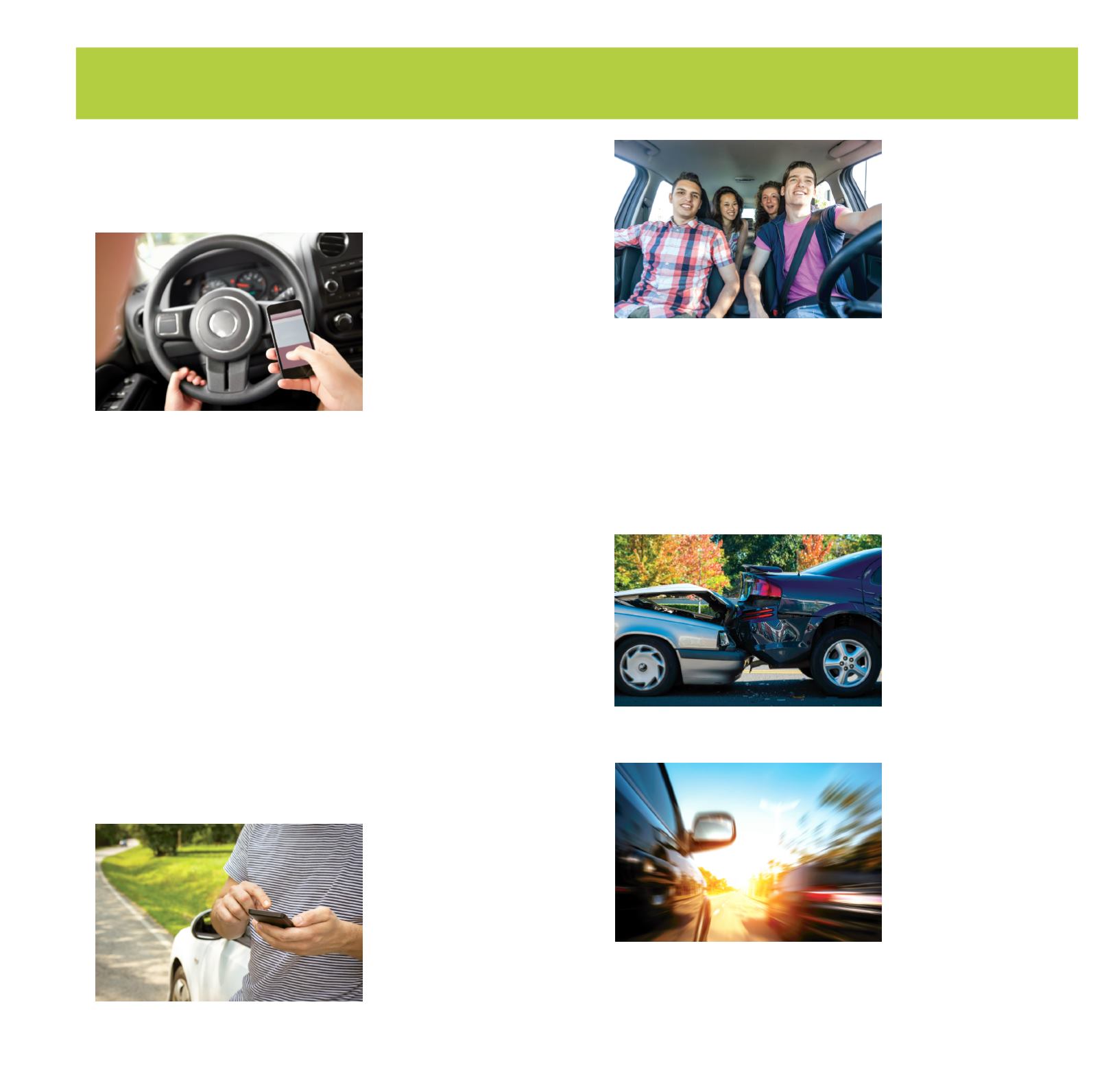
Cell phones: Don’t be
driven to distraction
One of the most common,
tempting and deadly distractions
for teens behind the wheel are
cell phones. One in four American
teen drivers admit to texting while
driving, and 40 percent of 12- to
17-year-olds say they have been
in a car where a teen driver used
a cell phone in a dangerous way.
Although teens and others may
not realize it, any cell phone use,
whether hand-held or hands-free, while driving is dangerous. Many states also ban
the use of cell phones, including hands-free, for novice teen drivers.
There’s no reason to sugarcoat it — texting while driving is a BAD idea. So what can
you do to stay safe and away from the phone with texting? Here are some solutions:
1.
Out of sight, out of mind.
Turn your phone on silent, and/or place it face down while you are driving so
that you cannot see when a text or a phone call comes in. This will limit the
temptation for you to answer or respond while the car is still moving.
2.
Pass it to a passenger.
Give your phone to a trusted passenger to hold while you are driving. If you are
expecting a call, they can answer and explain that you are currently driving and
will call back after you reach your destination. Make sure to return the favor next
time your friend offers to drive!
3.
Take a break.
If you are in the middle of texting or having a conversation with someone,
explain that you are about to get into the car and drive. Let them know that you
will continue the conversation once you arrive safely at your destination.
4.
Is there an app for that?
Download an app that blocks texting while driving. Some apps will even reward
users through point systems for not texting while driving.
5.
Put it in park.
If you are driving and you
can’t wait until the end of your
drive to respond to an incoming
call or text message, pull into a
nearby parking lot or other safe
area to park your car while
you respond.
Passengers
Distractions such as peer
passengers (driving someone
around your own age) while
driving can be deadly for teens.
Driving a friend home from
practice or to the movies may
seem harmless, but your crash
risk doubles if you have one peer
passenger in the car and actually
more than triples with two or
more peer passengers. These
distractions are so dangerous
because they take your focus off the road and lower your reaction time for dealing
with potential hazards.
Start talking to your friends about your family’s driving rules before you get your
license. They may not know that you’re not allowed to drive them around for another
year or how you expect them to behave once you can. Tell them you’re working really
hard to become a good driver, and you need their support.
As a driver, you must take control of the car. Remember, you’re responsible not only
for your safety, but also for your passengers. If they can’t follow your rules, then you
can’t drive them. Sometimes being a good friend is knowing when to say “no.”
Unsafe driving practices
It’s important to understand why
teens crash at a higher rate than
adults. There are many factors
that come into play, but there are
several common critical errors
inexperienced teen drivers make
that lead to serious crashes. These
include lack of scanning to detect
and respond to hazards, driving
too fast for road conditions, and
being distracted by something
inside or outside of the vehicle. The main reason teens die in these crashes is failing
to use their seat belts.
Teens and speeding
Teens see their driver license as
proof that they’re grown up. What
they don’t realize is that a license
can also expose them to certain
dangers, such as speeding.
Speeding, or going too fast for the
road conditions, is a major factor
in teen crash fatalities. Speeding
increases stopping distance and
reduces the time needed to avoid
a collision (called the 3-second
rule). It also increases the likelihood that the crash will result in injury. For example,
teens driving 40 m.p.h. in a 30 m.p.h. zone may think they’re “only” going 10 m.p.h.
over the posted speed limit. But that “small” increase in speed translates to a 78
percent increase in collision energy.


